


The perfect commercial cooking range for a bustling steakhouse is completely different from the one needed in a delicate pastry kitchen. Your menu should be the primary driver behind your equipment choices. Do your chefs need the instant, high-heat response of gas for searing and sautéing? Or does your operation depend on the steady, even temperature of an electric oven for consistent baking? This decision directly shapes your kitchen's workflow and the quality of your final product. We'll explore how different range types and configurations align with specific culinary styles, ensuring you invest in a tool that truly supports your team's craft and creativity.
Key Takeaways
- Choose your fuel type based on your cooking style: Gas offers instant, responsive heat control for fast-paced techniques, electric provides consistent, even heat ideal for baking and simmering, and induction delivers superior speed and energy efficiency.
- Prioritize practical features for daily performance: Before you buy, confirm the range's size and configuration fit your kitchen's workflow, its BTU output can handle your menu's demands, and its stainless steel construction is built to last.
- Budget for the total cost, not just the sticker price: A smart investment means factoring in long-term energy use, exploring financing to manage cash flow, and selecting a supplier that provides a strong warranty and reliable support.
What Are the Main Types of Commercial Ranges?
Choosing the right commercial range is a cornerstone of designing a functional and efficient kitchen. The type of fuel and heating technology you select will directly impact your cooking process, energy bills, and even the kitchen environment. Each option—gas, electric, induction, and dual fuel—comes with its own set of strengths tailored to different cooking styles and operational needs. Let's break down what makes each type unique so you can find the perfect fit for your culinary workflow.
Gas Ranges
There’s a reason so many professional chefs swear by gas ranges. They provide instant, responsive heat and give you precise control over the flame, allowing you to switch from a rolling boil to a gentle simmer in seconds. This level of control is essential for dishes that require quick temperature adjustments. If your menu features a lot of sautéing, searing, or wok cooking, the immediate feedback of a gas flame is invaluable. They are the workhorses of many fast-paced kitchens, offering the power and flexibility needed to execute a diverse menu with confidence.
Electric Ranges
Electric ranges are celebrated for their durability and consistent, even heat distribution, making them a fantastic choice for high-volume kitchens. Unlike gas, electric cooktops provide a steady heat source that’s perfect for simmering sauces or holding foods at a specific temperature for long periods. The flat, smooth tops on many models are also significantly easier to clean than gas grates, saving your staff precious time during cleanup. If your kitchen focuses on baking, roasting, or operations that demand reliable and uniform heat, an electric range is a solid and dependable option for your cooking equipment lineup.
Induction Ranges
Induction ranges represent the cutting edge of kitchen technology. They use magnetic fields to heat cookware directly, which means they heat up incredibly fast and offer exceptionally precise temperature control. This method is also highly energy-efficient, as very little heat is wasted, which helps keep your kitchen cooler and your utility bills lower. The main considerations are the higher upfront cost and the need for induction-compatible cookware (like cast iron or magnetic stainless steel). For kitchens prioritizing speed, safety, and energy efficiency, an induction range is a forward-thinking investment.
Dual Fuel Ranges
Why choose one when you can have the best of both worlds? Dual fuel ranges combine a gas cooktop with an electric oven, offering a versatile solution for chefs who want it all. You get the instant heat and fine-tuned control of gas burners on top for all your stovetop cooking needs. Below, the electric oven provides the dry, consistent heat that’s ideal for baking bread, pastries, and roasts with perfect, even results. This combination allows for maximum flexibility, empowering you to tackle any recipe without compromise. It’s a popular choice for bakeries, fine dining restaurants, and any kitchen that refuses to settle.
Key Features to Look For in a Commercial Range
Choosing the right commercial range is about more than just finding a place to cook. It’s about selecting the heart of your kitchen—a piece of equipment that directly impacts your workflow, menu execution, and even your utility bills. Before you make a decision, it’s important to look past the price tag and consider the features that will serve your team best. From the physical footprint to the power under the hood, every detail matters. Let’s walk through the key features to keep in mind so you can find the perfect match for your culinary operations.
Size and Configuration
First things first: will it fit? Measure your available space carefully, accounting for clearance on all sides for safety and cleaning. As you browse different models of cooking equipment, you’ll notice that countertop ranges can be a great solution for saving space in smaller kitchens.
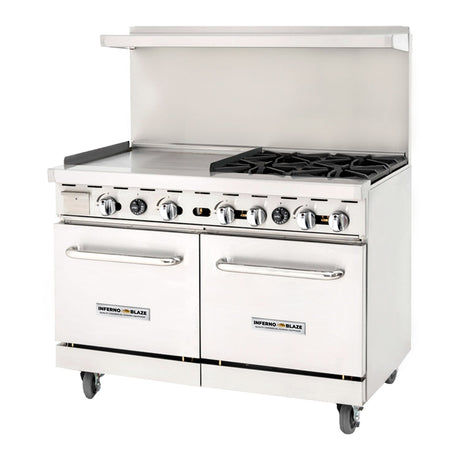
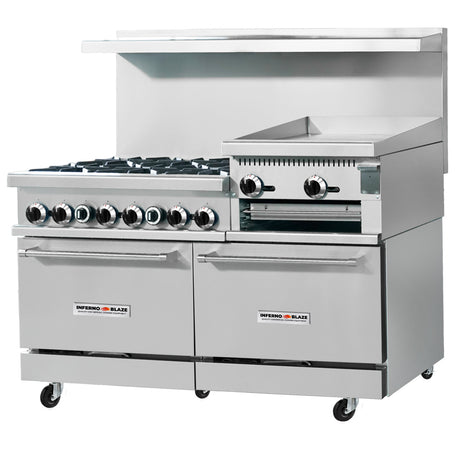
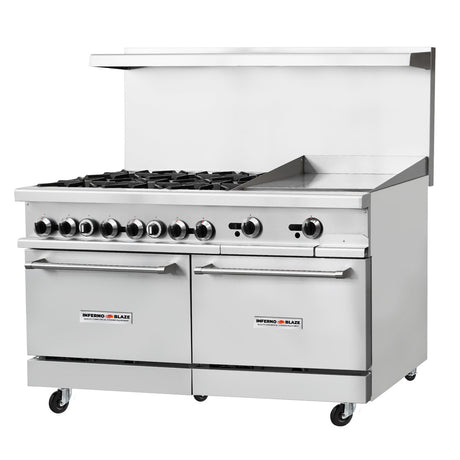
Beyond the dimensions, think about the ideal setup for your menu. Do you need six burners, or will four suffice? Would a flat-top griddle be more useful than two of those burners? Many ranges also come with a standard or convection oven base, which is perfect for kitchens that need to roast, bake, and cook simultaneously. Your daily prep list and cooking style should guide your choice of configuration.
Power and BTU Output
In a commercial kitchen, you need heat, and you need it fast. That’s where BTU (British Thermal Unit) comes in. BTU is a measure of heat output, and for commercial ranges, a higher BTU capacity means more powerful burners that can heat up quickly and maintain temperature, even when you’re working with large, cold pans.
Look for ranges with strong temperature knobs and powerful burners that can handle the demands of a busy service. The right BTU output depends on your cooking style. Searing steaks requires high heat, while simmering delicate sauces needs a lower, more controlled flame. A versatile range will offer a good mix of high-power and low-simmer capabilities across its burners.
Build Quality and Durability
Your commercial range will be one of the hardest-working pieces of equipment in your kitchen, so it needs to be tough. Look for models built with high-quality materials like stainless steel, which is not only durable but also easy to clean and sanitize. A strong frame and sturdy components are essential for withstanding the constant wear and tear of a professional environment.
A good indicator of build quality is the manufacturer's warranty. Reputable brands often provide a solid warranty because they stand behind their product’s construction. Investing in a durable, well-made range means fewer service calls and less downtime for your business.
Safety and Ventilation
A safe kitchen is an efficient kitchen. When it comes to a powerful cooking appliance like a commercial range, proper ventilation is non-negotiable. A quality ventilation system, including a range hood, is crucial for removing smoke, steam, and grease-laden air, creating a more comfortable and safer environment for your staff.
As a rule of thumb, your range hood should be at least as wide as the cooktop to effectively capture emissions. Proper ventilation isn't just a best practice; it's often a requirement to comply with local health and fire codes. Always check your local regulations to ensure your entire setup is compliant.
Energy Efficiency and Costs
The initial purchase price of your range is only part of its total cost. You also need to consider its long-term energy consumption. An energy-efficient model can save you a significant amount on utility bills over its lifespan. While gas ranges are known for their responsive heat, they can lose a lot of energy around the base of pots and pans, making them less efficient than some electric or induction counterparts.
When comparing models, look for an ENERGY STAR certification, which indicates that the appliance meets strict energy performance standards set by the EPA. Choosing an efficient model is a smart financial decision that also reduces your kitchen’s environmental footprint.
Gas vs. Electric vs. Induction: Which Is Best for Your Kitchen?
Choosing the right type of commercial range is one of the most important decisions you'll make for your kitchen. The debate between gas, electric, and induction isn't just about preference—it impacts your daily workflow, long-term energy bills, and even the consistency of your menu. The right choice can streamline your line and empower your chefs, while the wrong one can create daily frustrations and operational bottlenecks. Each type of cooking equipment brings its own set of strengths and weaknesses to the table. The best fit for your restaurant depends entirely on your specific needs, from the style of food you prepare and your team's cooking style to the ventilation system you have in place. Think about your busiest service—do you need instant heat adjustments for sautéing, or steady, even heat for holding sauces? Answering these questions will guide you to the right technology. Before you invest, it's crucial to understand how each option performs under pressure. Let's break down the pros and cons of each to help you find the perfect match for your culinary operations.
The Pros and Cons of Gas Ranges
Gas ranges are a classic in professional kitchens for a reason. Many professional chefs swear by them for their instant heat and incredibly precise temperature control. The open flame allows you to make immediate adjustments, going from a rolling boil to a gentle simmer in seconds. This responsiveness is ideal for delicate sauces, searing, and any technique that requires quick changes in heat. The main drawback, however, is energy efficiency. A significant amount of heat escapes around the base of your pots and pans, which can lead to higher energy consumption and a hotter kitchen environment for your staff.
The Pros and Cons of Electric Ranges
Electric ranges have come a long way from the slow-to-heat coils of the past. Modern electric cooktops offer consistent, even heating, which is fantastic for simmering and holding foods at a steady temperature. One of the biggest advantages is that some advanced models make it possible to run a fully ventless commercial kitchen, opening up new possibilities for your menu and space. Still, many chefs find the heat control less responsive than gas. While they heat up much faster than older models, there’s still a slight delay when you adjust the temperature up or down, which can be a deal-breaker for some cooking styles.
The Pros and Cons of Induction Ranges
Induction is the most energy-efficient option of the three. Instead of heating the cooktop, it uses magnetic fields to heat the cookware directly. This means faster heating, pinpoint temperature accuracy, and almost no wasted energy, which helps keep your kitchen much cooler. The surface itself stays relatively cool, making it a safer choice for a busy line. The trade-offs? Induction cooking requires specific, compatible cookware—cast iron and magnetic stainless steel work well—so you may need to invest in new pots and pans. The initial cost of an induction range can also be higher than its gas or electric counterparts.
Common Myths About Commercial Ranges
When outfitting your kitchen, it’s easy to get tripped up by outdated advice. One common myth is that electric equipment is always less powerful than gas, but today’s high-performance electric ranges can easily match the output of gas models. Another major misconception relates to ventilation. Many believe a commercial hood only needs to be as wide as the cooktop, but for proper safety and air quality, your hood should be at least as wide as the full piece of cooking equipment it serves. Getting the facts straight ensures your kitchen is both safe and efficient.
Top Commercial Cooking Range Brands to Know
Choosing the right brand can feel overwhelming, but it really comes down to finding a manufacturer that aligns with your kitchen’s workflow, budget, and culinary style. Some brands are known for their powerful gas workhorses, while others specialize in precise induction technology. Getting familiar with the key players in the market is a great first step. Here are a few top brands that consistently deliver on performance and reliability in professional kitchens.
Kitchen Pro Restaurant Equipment
While we’re best known for our own line of premium Frigos refrigeration equipment, our expertise doesn’t stop there. We understand that a great kitchen needs a full suite of reliable tools, which is why we help our customers find the best cooking equipment to match their specific operational needs. Our team is dedicated to outfitting your entire kitchen with high-performance, durable appliances that you can count on day in and day out. We believe that the right equipment is the backbone of any great kitchen, and we're here to help you build yours by partnering with leading manufacturers.
Waring
If you need precision and portability, Waring is a brand to watch. They are particularly well-regarded for their high-quality induction ranges, like the Waring WIH400. This model is a favorite for small kitchens, food trucks, or catering setups where space is tight but performance can't be compromised. It heats up incredibly fast with 1800 watts of power and gives chefs fine-tuned control with 12 different temperature settings. The easy-to-clean glass top and compact design make it a practical and efficient choice for any chef who needs an exact and reliable heat source for delicate tasks.
Cooking Performance Group
For busy kitchens that need a true workhorse, Cooking Performance Group delivers. Their S24-N Natural Gas Range is a standout option built for high-volume environments. It’s equipped with four powerful natural gas burners that push out a combined 150,000 BTUs, giving you the raw power needed for searing, sautéing, and boiling. At just 24 inches wide, it packs a lot of performance into a compact footprint and includes a standard oven underneath for added versatility. This range is designed for durability and efficiency, making it a solid foundation for any kitchen that needs to keep up with constant demand.
American Range
American Range has built a strong reputation for its robust and reliable commercial kitchen equipment. They offer a variety of restaurant ranges designed to withstand the rigors of a professional setting. One of their notable innovations is the Green Flame Series, which uses an electronic ignition system to help reduce gas consumption and lower your utility bills over time. They are also known for their powerful 32,000 BTU burners and offer configure-to-order ranges, allowing you to get a unit built specifically for your kitchen’s unique layout and workflow. This makes them a great choice for businesses looking for a durable, efficient, and somewhat customized solution.
Migali
Migali is a great brand to consider if you’re looking for a balance of performance, durability, and value. They offer a wide selection of commercial cooking ranges, with over 30 different models to fit various kitchen sizes and budgets. Their ranges are built to last, featuring heavy-duty cast iron cooking grates and a tough stainless steel exterior. A thoughtful touch is the porcelain oven interior, which makes cleanup much simpler—a huge plus in any busy kitchen. With a solid price range, Migali provides dependable options for everyone from new restaurant startups to established businesses looking to upgrade their equipment without breaking the bank.
How to Budget for Your Commercial Range
A commercial range is one of the most significant investments you'll make for your kitchen, acting as the true workhorse of your daily operations. Creating a budget for one involves more than just looking at the sticker price. You need to think about the initial cost, long-term operational expenses, and how you'll pay for it all. It's easy to get focused on finding the lowest price, but that can sometimes lead to higher costs down the road from energy bills or maintenance. A well-planned budget ensures you get the right piece of cooking equipment without straining your finances.
Breaking down the numbers will help you choose a range that not only fits your kitchen's immediate needs but also supports your business's long-term financial health. Think of it as a strategic decision, not just a purchase. From understanding the price differences between models to exploring payment options that preserve your cash flow, planning your budget carefully is key. A thoughtful approach prevents surprises and sets your kitchen up for success. In this section, we'll walk through the essential factors—from pricing tiers to hidden costs—so you can make a smart, confident investment in your kitchen's future.
Understanding Range Pricing: Entry-Level vs. Premium
When you start shopping, you'll see a wide price spectrum. Entry-level commercial ranges can start around $2,000, while premium models can climb past $4,500. What's behind the difference? It comes down to build quality, features, and brand reputation. For example, a solid six-burner range with a standard oven often lands in the middle, around $3,500. A premium model might offer more precise temperature control, heavier-duty construction, or advanced features that an entry-level unit lacks. Think about it as an investment in performance and longevity—a more expensive range is often built to withstand the demands of a high-volume kitchen for years to come.
Factoring in Hidden and Long-Term Costs
The initial purchase price is just one piece of the puzzle. Commercial kitchens are energy-hungry environments, and your range will be a major contributor to your utility bills. This is where long-term costs come into play. Gas ranges, for instance, are popular but are often less energy-efficient than their electric counterparts because they lose a lot of heat around the base of pots and pans. Over the life of the equipment, that wasted energy adds up. When budgeting, try to look beyond the sticker price and consider the total cost of ownership, including estimated energy use. Choosing more efficient restaurant equipment can save you significant money over time.
Exploring Financing and Leasing
If the upfront cost of a new commercial range feels steep, don't worry—you have options. Many businesses use financing or leasing to acquire the equipment they need without a massive cash outlay. For example, a range priced at just over $2,000 could be financed for as little as $50 per month. This approach allows you to get a high-quality, reliable unit in your kitchen right away while spreading the cost over time. It’s a smart way to manage your cash flow, especially for new restaurants or businesses looking to expand. Many equipment dealers offer business financing options to make purchasing more manageable.
Where to Buy Your Commercial Cooking Range
Once you’ve narrowed down the type of range you need, the next big question is where to buy it. This decision can impact everything from the price you pay to the support you receive after the sale. Making the right choice here ensures your investment is protected and you have a reliable partner for the long haul.
Authorized Dealers vs. Online Stores
Deciding between an authorized dealer and an online-only store often comes down to how much guidance you need. Authorized dealers typically have deep product knowledge and can offer personalized recommendations based on your specific kitchen setup and menu. They can be an invaluable resource if you’re feeling overwhelmed by the options.
On the other hand, online stores provide convenience and often have very competitive pricing. You can browse a massive selection of cooking equipment from your office and compare models and prices with ease. Many reputable online suppliers also offer fast shipping and detailed product specs, making it simple to get what you need quickly. The best suppliers offer a blend of both: the convenience of online shopping backed by expert customer support you can actually talk to.
Finding Sales and Discounts
Everyone loves a good deal, but in the world of commercial equipment, the lowest price isn't always the best value. Instead of just hunting for the biggest discount, look for smart savings. Keep an eye out for seasonal promotions, holiday sales, or bundle deals if you’re purchasing multiple pieces of equipment.
Some suppliers also offer discounts on floor models or scratch-and-dent units, which can be a fantastic way to get a high-quality range for less, as long as the cosmetic issues don't affect performance. Don’t forget to factor in shipping costs when comparing prices, as free or flat-rate shipping can add up to significant savings on a heavy item like a commercial range.
Why Warranty and Support Matter
A commercial range is the heart of your kitchen, and you can’t afford for it to go down. That’s why the warranty and post-sale support are just as important as the initial price. Before you buy, read the warranty details carefully. What does it cover—parts, labor, or both? How long does the coverage last? A strong warranty is a sign that the manufacturer stands behind its product.
Equally important is having access to a knowledgeable support team. If something goes wrong, you’ll want to talk to an expert who can help you troubleshoot the issue or arrange for a service call quickly. A reliable supplier won’t disappear after the sale; they’ll be there to help you protect your investment for years to come.
Related Articles
- Commercial Range Buying Guide: Tips for Smart Purchases
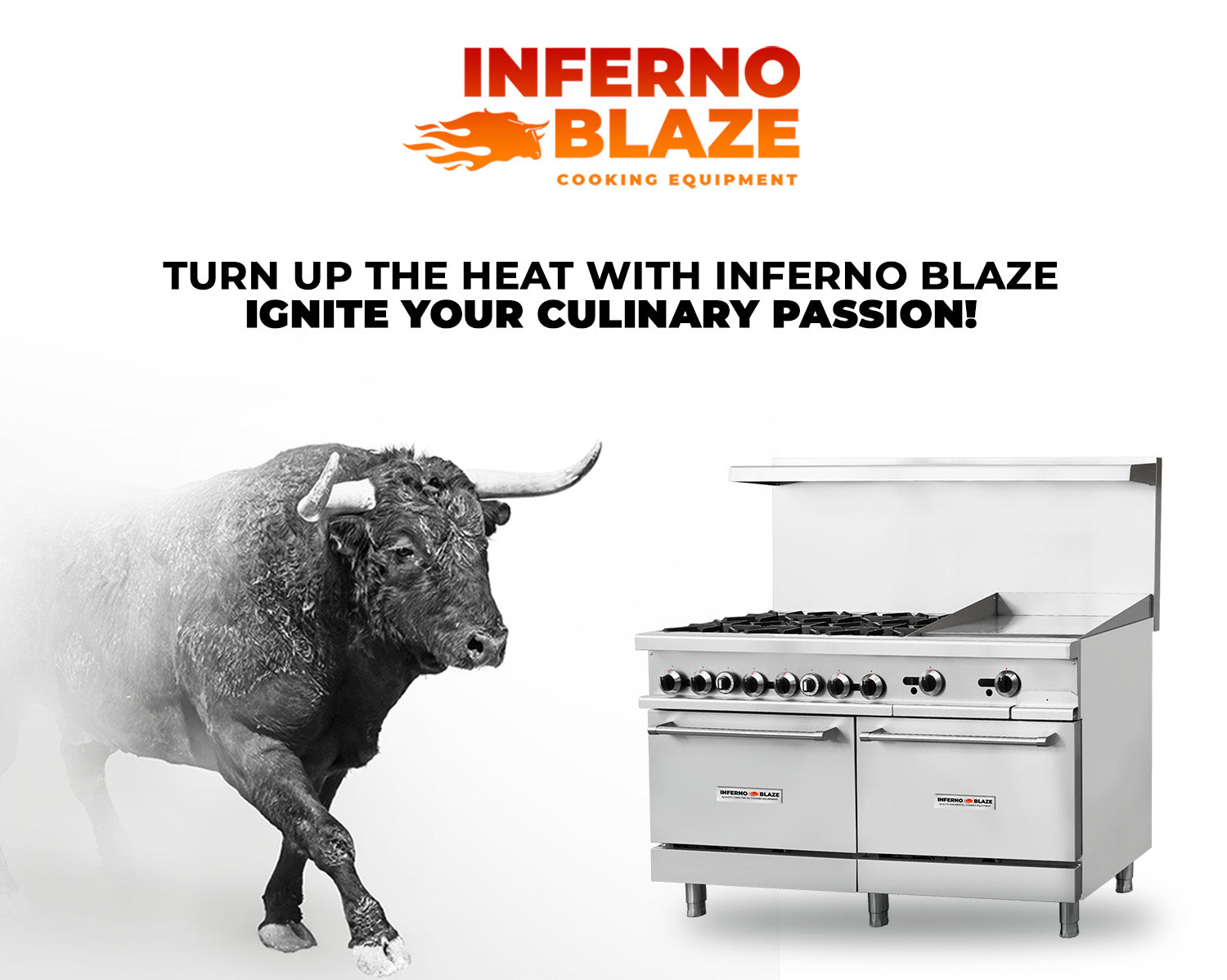
- Get Efficiency Inferno Blaze 48" NG 4 Burner Range with 2 Ovens IBP-GR-4824/NG
Frequently Asked Questions
How do I figure out the right size and number of burners for my kitchen? The best way to determine the right configuration is to look at your menu and your busiest service times. Think about how many pans you typically have going at once. If your menu is heavy on sautéed dishes, you'll want more individual burners. If you do a lot of breakfast service or burgers, swapping a couple of burners for a built-in flat-top griddle could streamline your entire process. Always measure your available space first, but let your cooking workflow be the ultimate guide.
Is an induction range really worth the higher upfront cost? For many kitchens, the answer is a definite yes. While the initial price is higher, induction ranges can save you a lot of money over time through their incredible energy efficiency. They heat the pan directly, so very little energy is wasted, which also keeps your kitchen significantly cooler. This efficiency, combined with faster cooking times and a safer, easier-to-clean surface, makes it a smart long-term investment for businesses focused on speed and lower utility bills.
What does BTU actually mean for my cooking, and how much do I need? Think of BTU (British Thermal Unit) as a measure of heating power. A higher BTU means the burner can produce more heat, which is essential for tasks like getting a hard sear on a steak or bringing a large stockpot to a boil quickly. You don't always need the absolute highest BTU, though. A quality range will offer a good mix, with some high-power burners for intense heat and others that can hold a very low, steady simmer for delicate sauces.
Besides the price, what are the biggest long-term costs I should plan for? The most significant long-term cost is almost always energy consumption. An inefficient range can add a surprising amount to your monthly utility bills, which is why looking at a model's energy efficiency is so important. You should also consider potential maintenance. A cheaper, less durable unit might save you money today, but it could lead to more frequent service calls and costly downtime in the future.
Why is a good warranty so important for a commercial range? A strong warranty is more than just a piece of paper; it’s a reflection of the manufacturer's confidence in their equipment. Your range is the heart of your kitchen, and if it goes down during a busy service, you lose money. A solid warranty that covers both parts and labor ensures that if something does go wrong, you can get it fixed quickly without a massive, unexpected bill. It’s a crucial safety net that protects your investment and your business operations.